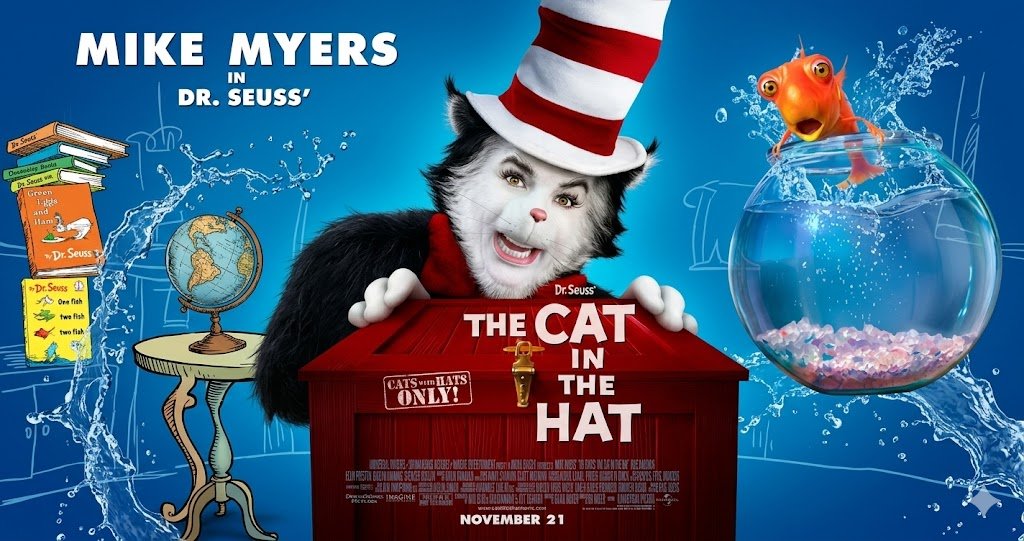
Introduction to The Cat in the Hat
The The Cat in the Hat Movie is one of the most talked-about live-action adaptations of a classic children’s book, with bringing the beloved world of a Dr. Seuss into a colorful and chaotic experience of cinematic. Released in the 2003, the film have attempts to transform the simple, rhythmic storytelling of the original book into a full-length comedy of Hollywood with featuring an exaggerated visuals, slapstick humor, and fantasy-driven storytelling.
For many viewers, the movie have remains as memorable for its bold design of a production, comedic performances, and its controversial reception in among the critics and audiences. Whether you are revisiting it for a nostalgia, researching the films of family, or analyzing a book-to-film adaptations, this guide will help you to understand everything about the movie in a detail.
In this article, you will learn about the storyline, cast, style of production, response of audience, and long-term legacy of The Cat in the Hat Movie. We will also explore why it have became both a cult favorite and a critical point of talking in adaptation history of Hollywood.
Overview of The Cat in the Hat Movie
The Cat in the Hat is a live-action fantasy comedy which is directed by the Bo Welch and produced by a Universal Pictures. The film is based on the iconic 1957 children’s book by Dr. Seuss, which is known for its simple rhymes, moral lessons, and imaginative design of character.
Unlike the original book, which is short and straightforward, the movie have expands the story into a full narrative which is involving a two children, Conrad and Sally, who are left at home alone while their mother is away. Their quiet day have quickly turns into a chaos when the the mischievous Cat have arrives and brings a world of the disorder, fun, and an unexpected consequences.
The movie is designed as a mix of the fantasy, comedy, and entertainment in family, with a heavy use of the colorful sets and exaggerated props to recreate the whimsical style of universe of Dr. Seuss.
Despite its ambitious vision, the film have received a mixed reactions due to its humor style and departure from the simplicity of the original story. However, it have remains as culturally relevant as a bold attempt of adaptation in the early 2000s family cinema.
Storyline and Plot Breakdown
The story have begins with a two siblings, Conrad and Sally, as living in a quiet home of suburban. Their mother is preparing for an important event, with leaving a strict instructions that they must behave as responsibly and keep the house as clean.
Everything have changes when a mysterious and chaotic figure which is known as the Cat have arrives in during a rainy afternoon. The Cat have introduces himself as a fun-loving troublemaker who insists on bringing an excitement into their dull day. Along with a Thing One and Thing Two, he have creates a whirlwind of the chaos inside the house.
As the story have progresses, the children struggle in between a following rules and enjoying the unpredictable games of Cat. The house have becomes a playground which is filled with a messy inventions, wild imagination, and comedic disasters.
However, the chaos have begins to spiral out of a control, with forcing the Conrad and Sally to take a responsibility as before their mother have returns. In the end, they must clean up the mess and decide that whether a fun and responsibility can truly coexist.
The narrative of film have expands the original book by adding an emotional growth, moral lessons, and a structured conflict-resolution arc.
Cast and Main Characters
The movie have features a well-known cast that have brings the eccentric characters to a life.
The Cat
Played by the Mike Myers, the Cat is the central character which is known for his wild humor, exaggerated expressions, and an unpredictable behavior. Myers have portrays the role with using a heavy makeup and costume design to match the cartoonish style of the character.
Conrad Walden
A young boy struggling with boredom and responsibility. His character represents curiosity and the temptation of chaos.
Sally Walden
A disciplined and rule-following sister who tries to maintain order in the house.
Supporting Characters
- Thing One and Thing Two: chaotic creatures who assist the Cat
- Mother Walden: responsible guardian trying to maintain structure
- Larry Quinn: the boyfriend of mother, which is adding a tension to the household dynamic
Each character have plays a role in balancing a structure vs. chaos, which is the central theme of the movie.
Production and Adaptation Process
Bringing Dr. Seuss’s world to life was one of the most challenging aspects of a production. The filmmakers have wanted to maintain the whimsical tone of book while expanding it into a feature-length screenplay.
The team of production have designed an oversized props, distorted architecture, and surreal landscapes to replicate the signature Dr. Seuss aesthetic. Sets were physically built rather than heavily as relying on a CGI, with giving the film a unique identity of visual.
However, adapting a short children’s book into a 90-minute narrative have required a significant additions to the original story. This have included a new characters, subplots, and comedic sequences that were not present in the material of source.
The goal was to create a live-action experience that have felt like as stepping into a world of storybook, but balancing a humor, pacing, and expectations of audience have proved as challenging.
Visual Style and Humor Approach
One of the most distinctive aspects of The Cat in the Hat is its visual presentation. The movie have uses an exaggerated colors, distorted furniture, and surreal environments to create a cartoon-like atmosphere.
The humor is heavily slapstick, with relying on a physical comedy, exaggerated reactions, and fast-paced dialogue. This style was intended to appeal to a children while also entertaining the adults with a layered jokes.
However, the style of humor have became as one of the most debated aspects of the film. Some viewers have appreciated its boldness, while others have felt it did not align with the gentle charm of the original book.
Despite of a criticism, the visual identity of film have remains as one of its strongest features and is often studied in a discussions about the choices of a adaptation design.
Box Office Performance and Reception
The film have achieved a success in a moderate box office but struggled as critically. While it have attracted an audiences due to the recognition of brand and appeal of family, reviews were largely negative, with focusing on a tonal inconsistency and excessive humor.
Critics have often compared it as unfavorably to the simplicity and elegance of a original work of Dr. Seuss. However, over the time, some audiences have revisited the film with a nostalgia, with leading to a following of small cult.
The mixed reception have highlights the challenge of adapting a beloved literature of children into the formats of live-action while maintaining an authenticity.
Legacy and Cultural Impact
Despite of its controversial reception, the movie has left a lasting cultural footprint. It is frequently referenced in a discussions about the risky adaptations of Hollywood and early 2000s family films.
The film have also influenced how an adaptations of studios approach of a classic books of children, with encouraging a more cautious management of tone and respect for a source material as simplicity.
Today, The Cat in the Hat is often remembered as a bold but imperfect experiment in the storytelling of a cinematic.
Also Read: The Brave and the Bold Movie: Batman and Robin’s New DC Universe
Family Viewing Insights and Lessons
While the movie is primarily a comedy, it have carries underlying a lessons about the responsibility, balance, and consequences.
Key takeaways have include:
- Fun should not replace responsibility
- Actions have consequences
- Balance in between a discipline and creativity is important
- Chaos can be entertaining but must be controlled
For a audiences of family, the film can spark a conversations about the decision-making and behavior in a lighthearted context.
FAQs
Is The Cat in the Hat Movie based on a book?
Yes, it is based on a Dr. Seuss’s 1957 children’s book The Cat in the Hat.
Who have played the Cat in the movie?
The role was played by Mike Myers.
Why was the movie controversial?
It have received a criticism for its style of humor, tone, and departure from the simplicity of the original book.
Is the movie suitable for a children?
Yes, it is a family film, though some humor may appeal as more to an older audiences.
Will there be a sequel?
There is no confirmed sequel to the adaptation of 2003.
Conclusion
The Cat in the Hat have remains as one of the most recognizable and debated adaptations in a history of family film. While it did not achieve a success in a universal critical, as it have stands out for its bold creativity of visual, comedic ambition, and willingness to expand a simple story into a universe of full cinematic.
Over time, the movie has found a place in a discussions of pop culture, not just as a film, but as a case study in the challenges of adaptation. It have highlights the importance of balancing an originality with the respect for a source material.
For a viewers today, it have offers both an entertainment and insight into the early 2000s trends of filmmaking, with making it a unique entry in the world of a family cinema.