A $750,000 Horror Film Made $400 Million — But the Viral Math Everyone Is Sharing Is Wrong
You have seen the post. A 26-year-old YouTuber made a horror film for $750,000 and it made over $400 million. A 533x return. The greatest deal in movie history.
The numbers in that sentence are all real. The conclusion is not.
$750,000 was the production budget — what it cost to shoot the film, and nothing else. It is not what it cost to release the film, and $400 million is not what anybody banked. The real math is less absurd, still extraordinary, and considerably more interesting than the meme.
Here is what actually happened with the Obsession box office, and the statistic that matters far more than the budget one.
Quick answer: Curry Barker’s Obsession had a production budget of $750,000 and has grossed over $400 million worldwide since opening on 15 May 2026 — making it the highest-grossing film festival acquisition ever and Focus Features’ biggest film. But $750,000 was only the shooting cost. Focus paid roughly $14–15 million for the rights, and marketing cost more again.
The numbers, straight
Per Box Office Mojo figures reported by the Northeast Times, Obsession had passed $403 million worldwide by mid-July — roughly $245 million domestic and $158 million international — making it the seventh-highest-grossing film of 2026. ScreenRant put the running total at $426.7 million a few days later. It is still moving.
Along the way it collected a genuinely serious set of records. Forbes reported it became Focus Features’ highest-grossing film ever when it crossed $200 million on 8 June, and then the highest-grossing film festival acquisition of all time, passing the total set by the 1999 independent horror film that invented this entire category.
The Wrap’s Jeremy Fuster reported it as the highest-grossing film ever made with a budget below $1 million. ScreenRant’s Brennan Klein framed the record it broke bluntly: it beat Sinners, with a budget under 1% of the size.
What $750,000 actually bought
Barker wrote, directed and edited Obsession himself. Per the Northeast Times, he spent eight months finishing the screenplay while working at a coffee shop, and shot the film in the Los Angeles area in late October 2024. Reports on the shoot length differ — NBC News says 20 days, the Northeast Times says 26 — but either way it was under a month.
That $750,000 covered the shoot. It did not cover:
- The acquisition. After the film premiered at the Toronto International Film Festival in September 2025, studios entered a bidding war. NBC News and Forbes report Focus Features won it for about $15 million; Gizmodo and Fangoria put the figure at $14 million. Either way, the number that mattered commercially was never $750,000 — it was roughly twenty times that, paid before a single ticket was sold.
- Prints and advertising. A rough industry rule is that marketing a wide release costs around double the negative cost. Obsession opened on 2,615 North American screens. That does not happen quietly.
- The exhibitor split. Cinemas keep roughly half of domestic ticket revenue, and the studio’s share of international grosses is typically smaller again. “Made $400 million” is not “received $400 million.”
Gizmodo’s Germain Lussier is, as far as I can find, the only writer who has published this arithmetic. His estimate: Obsession needed roughly $30 million to break even — and it got there on day four.
So the honest version is not “$750,000 became $400 million.” It is: a film that needed about $30 million to be profitable has made over $400 million, and cleared its break-even in four days. Nobody needed to inflate that. It is one of the most profitable films ever made on its own terms.
The statistic that actually matters
Forget the budget for a moment. This is the number that made the industry sit up.
Obsession opened to $17.1 million. Then, in its second weekend, it went up.
Executive producer Jason Blum — a man who has spent his career on exactly this kind of film — posted on X that it was the only wide-release horror film on record to grow in its second weekend at that scale. Forbes reported a 39% domestic increase in weekend two and a further 14% rise in weekend three. Blum’s own post cited $22.4 million and 30% growth. The figures differ because they measure slightly different things; the direction does not.
Then weekend four fell only 7%. Weekend five fell 25%. By its seventh weekend, 26–28 June, it was still pulling $9.8 million from 2,965 theatres.
Here is why this matters more than the budget. Opening weekend measures marketing. Every weekend after that measures the movie. A studio can buy an opening. Nobody can buy a second weekend that is bigger than the first — that only happens when the people who saw it on Friday spend the week telling everyone they know. Gizmodo notes that a wide release growing across multiple weekends hadn’t happened in decades.
The budget story is a fun fact. The legs are the actual event.
Then it went to VOD, and kept selling tickets
This is the detail that should be the headline.
Focus Features normally has the option to put its films on premium video on demand after 17 days in cinemas. Per World of Reel, reported by Forbes, the original PVOD date for Obsession was 2 June. Focus scrapped it and let the theatrical run keep going — a real departure from how the studio usually operates.
The film finally hit digital on 30 June, at $24.99 to buy and $19.99 to rent.
And then, over the Fourth of July weekend — with the film legally watchable at home — Fangoria reports it took another $5.3 million domestically and $12 million internationally.
People paid for cinema tickets to a film they could have rented that evening. That is not a marketing outcome. That is a cultural one.
What the film actually is
Worth stating plainly, because the numbers have swallowed the movie.
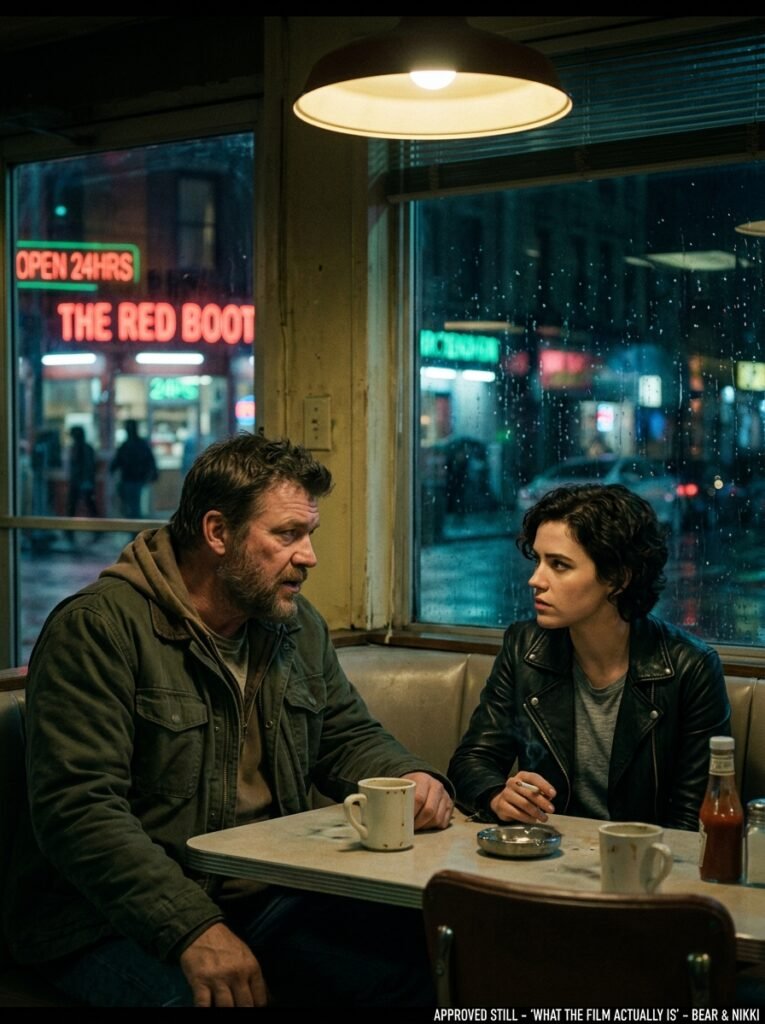
Per Forbes, Michael Johnston plays Bear, a music store employee with a hopeless crush on his colleague Nikki, played by Inde Navarrette. Convinced he is stuck in the friend zone, Bear uses a novelty item called a “One Wish Willow” and wishes that Nikki would love him more than anyone in the world. The wish works. Nikki becomes dangerously obsessed, and is not squeamish about what she’ll do about it. It’s rated R. Megan Lawless, Andy Richter and Barker’s regular collaborator Cooper Tomlinson also feature.
Two things about the execution are worth knowing. The Northeast Times reports that Navarrette’s physical performance — the screams, the facial contortions, the vocal shifts — was developed with Barker and performed without CGI or AI, per the production notes; she cited Betty Gabriel in Get Out, Toni Collette in Hereditary and Mia Goth in Pearl as reference points.
And Michael Stasko, a filmmaker and professor at the University of Windsor, told CBC that a large part of the film’s success is simply an efficient script — it refuses to spend scenes on world-building or side characters, and layers several things into every scene instead.
A tight script and a performance people can’t stop describing to their friends. That is the whole trick, and it is not a cheap one.
The decision that made it possible
One detail from the Northeast Times deserves its own line.
Barker was offered $1 million to direct, and reportedly turned down $2 million to rewrite the script in a way that would have made the lead character more of a conventional hero.
He took less money to keep the film strange.
Every element of what happened afterwards — the festival bidding war, the word of mouth, the second weekend — traces back to that. The version of Obsession with a likeable protagonist does not get talked about. It gets watched once and forgotten.
Obsession and Backrooms: the YouTube pipeline
Obsession is not alone, and this is the part with genuine industry consequences.
A24 and 20-year-old director Kane Parsons had their own 2026 horror hit with Backrooms, which Bloody Disgusting reported at $349.7 million globally — also originating from a series of YouTube videos. Barker himself came from YouTube, where he is half of the sketch duo “That’s a Bad Idea” with Cooper Tomlinson, and where he uploaded a short horror film called The Chair in 2023 that got him in the room in the first place.
Two of the biggest original hits of the year, both from filmmakers under 30, both from the platform Hollywood spent a decade dismissing. As the Northeast Times notes, the two films together have started a real industry conversation about Gen Z directors and their ability to get young audiences back into cinemas.
Barker’s next film, the supernatural comedy Anything but Ghosts, is in post-production with Bryce Dallas Howard, Aaron Paul and Tomlinson. A24 has him lined up to write and direct a remake of The Texas Chain Saw Massacre.
So how should you frame it?
If you want the accurate version to repeat at work tomorrow:
A film that cost $750,000 to shoot, and roughly $30 million to buy and release, has grossed over $400 million — clearing profitability on day four, growing in its second weekend for the first time in decades, and continuing to sell cinema tickets after arriving on VOD.
That is a smaller number than the meme and a much bigger story than it.
Key Takeaways
- Obsession has passed $400 million worldwide — around $403M in mid-July per Box Office Mojo, ~$426.7M days later per ScreenRant. Seventh-biggest film of 2026.
- $750,000 was the shooting budget only. Focus Features paid about $14–15 million for rights after TIFF, and marketing typically costs around double the negative cost.
- Realistic break-even was roughly $30 million, per Gizmodo — reached on day four.
- It grew in its second weekend. Jason Blum called it the only wide-release horror film on record to do so at that scale. That’s the real story, not the budget.
- Focus scrapped the 2 June PVOD date to protect the run. It released digitally on 30 June — and still took $17.3M worldwide over the following holiday weekend.
- Records: Focus Features’ highest-grossing film ever; highest-grossing festival acquisition of all time; highest-grossing film with a sub-$1M budget.
- Barker turned down $2 million to make his lead a conventional hero. He said no.
- The YouTube pipeline is real. Backrooms (Kane Parsons, A24) hit $349.7M the same year, from the same origin.
FAQ
How much has Obsession made at the box office? Over $400 million worldwide. Box Office Mojo figures reported in mid-July put it at roughly $403 million — about $245 million domestic and $158 million international — with ScreenRant reporting around $426.7 million days later. It is still in release.
What was Obsession’s budget? The production budget was $750,000. That covered the shoot only. Focus Features then acquired distribution rights for a reported $14–15 million after the film’s TIFF premiere, and marketing costs are additional.
Did Obsession really make a 500x return? No. That figure compares the worldwide gross to the shooting budget, which ignores the acquisition price, marketing, and the fact that cinemas keep roughly half of domestic ticket sales. Gizmodo estimated realistic break-even at around $30 million, which the film passed on day four.