THE DOG STARS 2026: EVERYTHING TO KNOW BEFORE RIDLEY SCOTT’S MOVIE OPENS
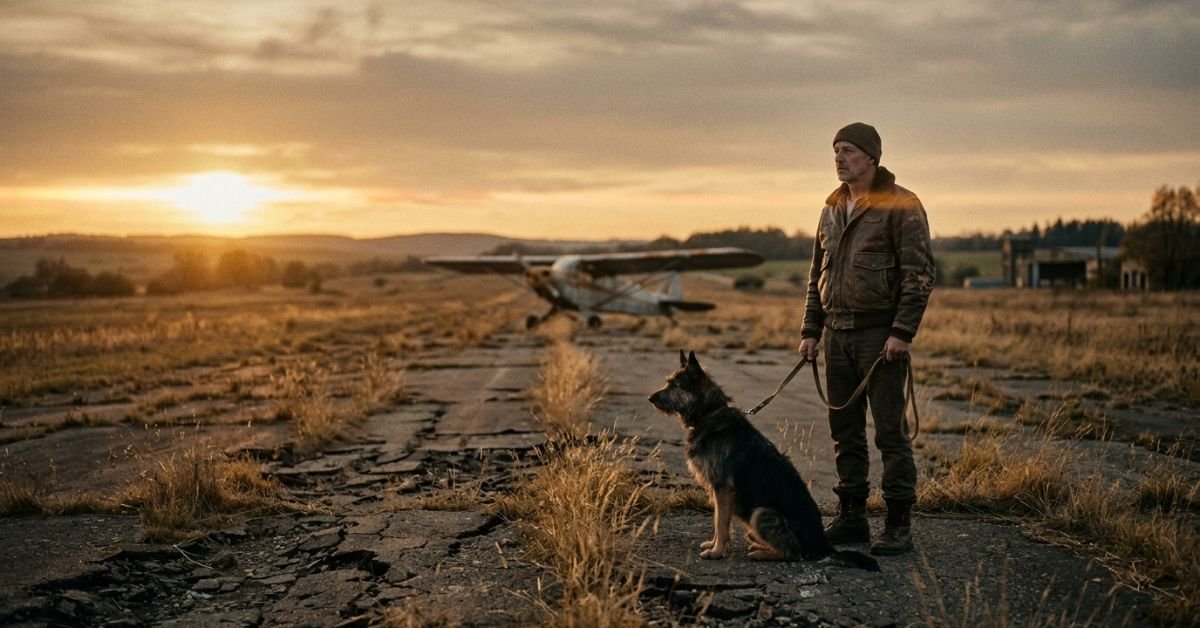
There is a reflex that kicks in the moment Ridley Scott’s name lands next to the words “science fiction.” Your mind reaches for spacecraft, rain-slicked megacities, corridors and creatures. You buy a ticket on the strength of that memory. Then the film starts, and it is a man, a dog, an empty airfield and a lot of silence.
That gap between expectation and delivery explains nearly every negative reaction that has surfaced so far. Viewers who walked in wanting scale walked out unsatisfied. Viewers who walked in expecting a character study came out impressed. Same film, two completely different verdicts, and the difference sits mostly in what people assumed beforehand.
So before you decide whether to spend an evening on it, here is the full picture — the story, the people who made it, why the critical reaction split down the middle, whether the numbers can work, and how long you would wait if you’d rather watch at home.
WHAT IS THE DOG STARS 2026 ABOUT?
Some years after a flu tears through the human population, a former civilian pilot has built a narrow, workable life inside a disused aircraft hangar in Colorado. His company is a dog and a heavily armed neighbour with a soldier’s instincts and no appetite for sentiment. The two of them have turned survival into a routine — perimeter, supplies, patrol, repeat.
Then, on a flight in his ageing light aircraft, he catches a voice on the radio. Somebody is transmitting. Somebody is alive out there, beyond the range they have spent years never crossing.
He goes looking. That decision is the entire film.
What gives it weight is what he is carrying. He lost his wife to the same illness that emptied the world, and he has never really put that down. The journey outward is also, quite openly, a journey away from a grief he has been managing rather than facing. The dangers he meets on the way — scavenging groups who have made their own arrangements with the new world — are real, but they are not the point. The point is a man deciding that a life spent merely not dying is not enough.
BACKGROUND: FROM A 2012 NOVEL TO SCOTT’S CAMERA
Peter Heller’s novel arrived in 2012 and found a readership that took it personally. It is written in a clipped, interior voice — fragments, half-sentences, a mind talking to itself because there is nobody else. That style is precisely what makes it difficult to film. A camera cannot reproduce a narrator’s internal rhythm, so any adaptation has to find a visual substitute for it.
The screenwriter chosen for that problem was Mark L. Smith, whose past work includes a celebrated wilderness survival epic built almost entirely out of landscape, endurance and long stretches without speech. That is a sensible pairing on paper, and it signals the register the production was aiming for.
The project also changed shape along the way. A different actor was originally set for the lead and departed over scheduling; Jacob Elordi stepped in. The release date shifted too, moving out of the spring calendar to give post-production more room. Neither is unusual, but together they explain why the film arrives later and with a slightly different face than early announcements suggested.
There is one more thing worth registering. Scott is in his late eighties and still releasing features at a rate most directors half his age cannot match. Whatever anyone thinks of the result, the working pace alone is remarkable, and this marks his first return to science fiction in the better part of a decade.
WHERE THINGS STAND RIGHT NOW
The film held its world premiere in London on 20 August, followed by a run of press screenings across the following week. Attendees were permitted to post brief impressions immediately, while full reviews stayed locked until 25 August — which is why the internet spent five days full of one-line verdicts and no actual criticism.
The rollout is genuinely global rather than staggered over months. Most international markets receive it from 26 August, with North America two days later on 28 August. Ticketing opened ahead of release across major chains in multiple regions.
Ratings differ by territory, as they always do. The United States classification is R, and comparable adult ratings apply elsewhere. If you are planning around younger viewers, check your local board rather than assuming — the violence in this film is not constant, but when it arrives it is not gentle.
THE DOG STARS CAST: WHO PLAYS WHO
| Actor | Role | Best known for |
|---|---|---|
| Jacob Elordi | Hig, the pilot | Euphoria, Wuthering Heights, Frankenstein |
| Josh Brolin | Bangley, the survivalist | Dune, Sicario |
| Margaret Qualley | Cima | The Substance, Once Upon a Time… in Hollywood |
| Guy Pearce | Supporting | Memento, The Brutalist |
| Benedict Wong | Supporting | Doctor Strange, The Martian |
| Allison Janney | Supporting | I, Tonya, The West Wing |
| Jasper | The dog | Hig’s constant companion |
Elordi arrives in a strong position. He picked up his first Academy Award nomination recently, closed out the series that made him famous, and this is his second cinema release of the year. For a lot of the international audience, his name is now the main reason the film is on their radar at all.
Brolin is doing something quieter and harder. Bangley could easily have been a stock hard man; the reactions that praise the film almost all single out the friction between his character’s grim practicality and Elordi’s stubborn hopefulness as the thing that makes it work.
And the dog matters more than dog-in-a-film usually does. Jasper is not decoration. He is the last daily proof that Hig is still someone who looks after another living creature, which is the exact quality the world around him has stopped rewarding.
THE CREW, THE LOOK AND WHERE IT WAS SHOT
| Role | Credit |
|---|---|
| Director | Ridley Scott |
| Screenplay | Mark L. Smith |
| Source novel | Peter Heller (2012) |
| Cinematography | Erik Messerschmidt |
| Editing | Sam Restivo, Claire Simpson |
| Score | Harry Gregson-Williams |
| Studios | 20th Century Studios, Scott Free Productions |
| Reported budget | ≈ US$110 million |
One production choice does more than any other to shape how the film feels: the emptied-out America you see on screen was largely built out of Italian terrain. That substitution is quietly clever. Audiences worldwide have seen the American West so many times that it has stopped registering as a real place. Filming somewhere else, then dressing it as America, produces a landscape that reads as wrong in a way that suits a story about a world that no longer works.
The budget is the number to keep in mind. Around US$110 million puts this in the same financial bracket as a mid-sized studio blockbuster — a substantial commitment for a film with no franchise attached and an adult, unhurried tone. That figure becomes the central tension of the next section.
THE DOG STARS REVIEW PICTURE: WHY CRITICS SPLIT
The reaction is not mild. It is polarised, and the fault line is unusually clean.
Those in favour describe a film that is contemplative and unexpectedly warm, punctuated by sudden bursts of violence that land harder because of the quiet around them. Several noted that they expected relentless bleakness and found something closer to optimism — a story about the need for other people rather than the futility of everything. The score drew consistent praise, as did the sense of a director working in a smaller, more personal key than usual.
Those against aim almost entirely at the writing. The recurring complaints are dialogue that states its themes outright rather than letting them emerge, a first act that takes too long to get moving, and a running time that several reviewers felt outstayed the material. One reaction summarised the frustration as a film assembled well from parts that other stories have already used better.
| What critics praised | What critics criticised |
|---|---|
| Cinematography and world-building | On-the-nose dialogue |
| Elordi and Brolin’s chemistry | Slow opening stretch |
| The score | Running time |
| Emotional weight and hopeful tone | Familiar post-apocalyptic beats |
I am deliberately not quoting an aggregate score here. Reviews only unlocked on 25 August, and any figure published in the first day or two moves as more critics file. If you want a number, check Rotten Tomatoes live rather than relying on a roundup written before the count settled.
THE DOG STARS BOX OFFICE: CAN THE NUMBERS WORK?
This is where the film is exposed.
Industry forecasters have placed the North American opening weekend in the region of US$18m–$23m. Set against a production budget near $110m — before marketing, which typically adds a great deal more — that is a modest start.
The comparison set is not encouraging either. Scott’s recent openings have swung wildly, from single-digit millions on a period drama to well over fifty million on a legacy sequel, and this forecast lands nearer the lower end of that range. Meanwhile, appetite for post-apocalyptic stories has cooled since the genre’s peak, with only a handful of franchises reliably drawing crowds.
Which makes the international picture disproportionately important. A film like this does not recover its cost domestically. It recovers it by playing steadily across Europe, Latin America, Asia and Australia over several weeks, helped along by a cast with genuine global recognition and a premise that needs no cultural translation — everyone on earth now has a personal memory of a pandemic, which is not something the 2012 novel could have counted on.
A common rule of thumb suggests a film needs roughly two and a half times its production budget in worldwide receipts before theatrical profitability comes into view. Treat that as a rough industry heuristic rather than a studio accounting statement, since the real figure depends on marketing spend and exhibitor splits that are never made public.
THE DOG STARS STREAMING: HOW LONG UNTIL YOU CAN WATCH AT HOME?
No date has been announced anywhere. What can be described is the pattern this studio has followed consistently.
Films from this label typically stay exclusive to cinemas for roughly three months. They then appear for digital rental and purchase somewhere in the second month after release, and land on subscription streaming after that. In the United States the destination is Hulu; across most other territories the same titles arrive on Disney+, because Hulu simply does not operate there. In a few markets the split is different again, so the safest answer for any individual reader is: whichever service carries this studio’s catalogue in your country.
| Approximate window | What becomes available |
|---|---|
| From 26–28 August 2026 | Cinemas only, worldwide |
| Late October / early November | Likely digital rental and purchase |
| Around December 2026 | Likely Hulu (US) / Disney+ (most other markets) |
Every row after the first is projection, not announcement. Right now the only thing available on either streaming platform is a short promotional featurette — not the film.
COMMON QUESTIONS READERS RUN INTO
Do I need to read the novel first? No. The film stands on its own. Heller’s book works through an interior voice that no adaptation could carry over intact, so treat the two as related rather than identical experiences.
Is it relentlessly bleak? Less than you would expect. Several of the strongest positive reactions specifically flagged surprise at how hopeful the film turns out to be about human connection.
How violent is it? Violent in short, sharp episodes rather than continuously. The adult rating is earned, and the contrast with the quiet passages is deliberate.
What happens to the dog? I am not spoiling a film three days from release. Readers of the novel will know Heller gives Jasper’s story real emotional consequence — go in aware of that, however the adaptation chooses to handle it.
Is it worth a premium-format screen? If the photography is the least disputed element of the entire film, then yes, the largest screen near you is the sensible choice.
Will it play in my country? The rollout is wide and international from the outset rather than a US-first release with a long delay attached, though exact dates vary by territory.
THE OUTLOOK
The Dog Stars is an unusual thing to find on a late-August release calendar: an expensive, unhurried, adult drama with no sequel potential, made by a director with nothing left to prove and apparently no interest in coasting. Depending on your view of the current cinema business, that is either admirable stubbornness or a commercial miscalculation. Both readings are defensible, and the film will probably attract both for years.
What decides it now is not the reviews. Reviews this split cancel each other out. It is whether the people who see it in the opening ten days walk out and tell someone else to go.
WHAT TO DO NEXT
- Want it big? Book for opening weekend. Premium screens fill fastest on a Scott release, and this is a film whose main strength is visual.
- Undecided? Wait forty-eight hours and read audience reactions rather than critic scores. On a film this polarised, the two groups are likely to disagree.
- Thinking of reading the novel first? It is short enough for a weekend, but do not treat it as required preparation.
- Waiting for home viewing? Pencil in late October for digital rental and December for subscription streaming, then confirm against your local service.
- Tracking it commercially? Ignore the opening figure. Watch the second-weekend percentage drop — that single number will tell you everything about whether it has legs.
FAQ
WHEN DOES THE DOG STARS 2026 COME OUT?
International releases begin on 26 August 2026, with North America following on 28 August. It opens in cinemas only, with no simultaneous streaming release anywhere.
WHO DIRECTED THE DOG STARS AND WHO WROTE IT?
Ridley Scott directed, working from a screenplay by Mark L. Smith, adapted from Peter Heller’s 2012 novel of the same name.