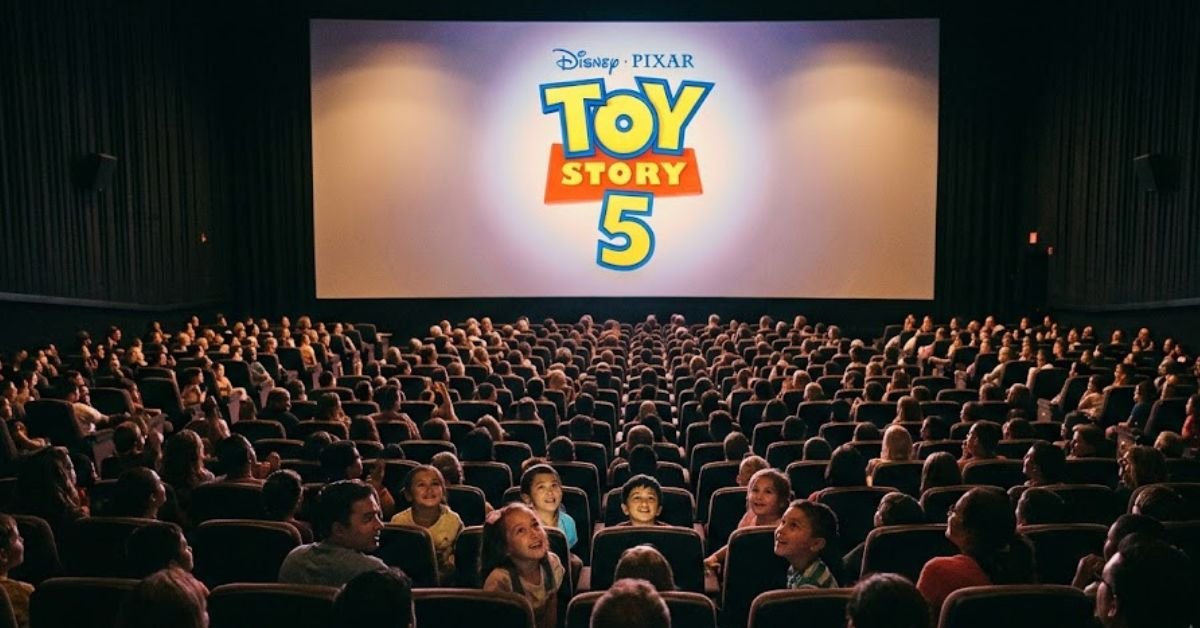
Toy Story 5 has done exactly what Pixar hoped it would: the Toy Story 5 box office opening of roughly $160 million domestically is the biggest debut of 2026 so far and a franchise record. In its first three weeks the film has already crossed $200 million in North America, posted the best single Tuesday of the year, and held the top spot for two straight weekends. Below we break down the real numbers, how the run compares to the rest of 2026, why audiences are showing up, and where the film could finish.
Toy Story 5 box office: a record-breaking opening
When Pixar relaunches one of its crown-jewel franchises, expectations run high — and Toy Story 5 cleared them. The film opened to about $160 million domestically, the largest debut the Toy Story series has ever recorded and the biggest opening weekend of 2026 to date. For context, that figure helped drive the first $200 million three-day weekend of the year at the North American box office, a benchmark that earlier 2026 holidays had only reached with the help of long weekends.
An opening of this size matters for more than bragging rights. Historically, almost every film that has opened above $150 million has gone on to cross $400 million domestically. That track record instantly reframes the conversation around Toy Story 5: the question is no longer whether it will be a hit, but how large the final number can grow.
Breaking down the Toy Story 5 box office numbers
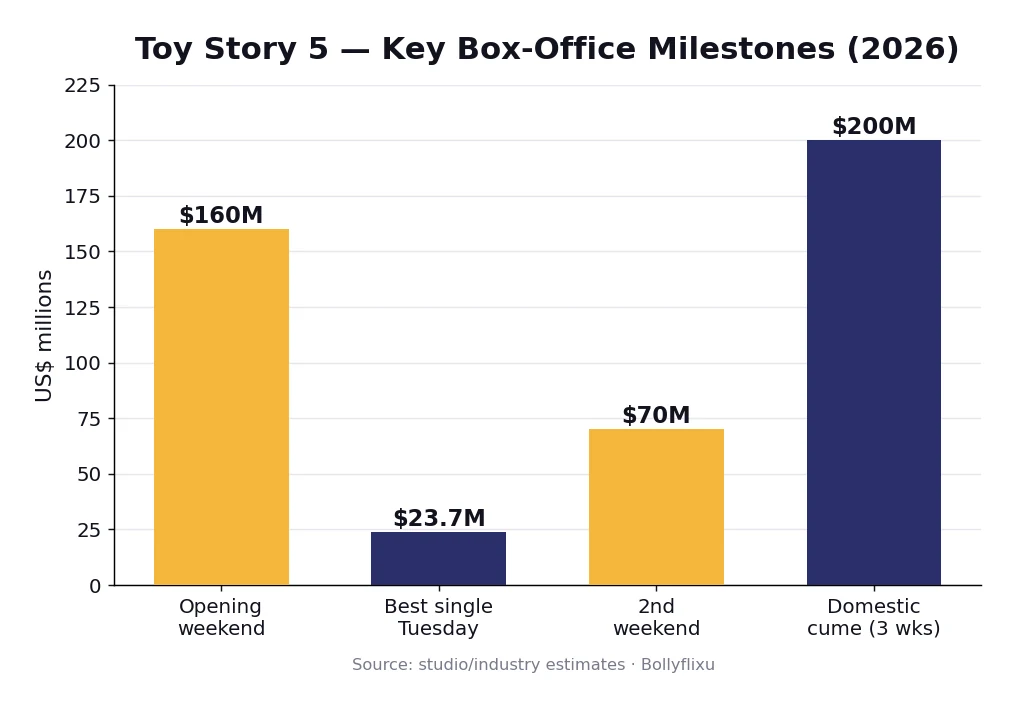
The headline figure is the opening, but the supporting numbers tell the real story of how Toy Story 5 is performing. After the franchise-record launch, the film crossed $200 million domestically within its first three weeks. Along the way it recorded a single-day Tuesday gross of about $23.7 million — the best Tuesday of any film released in 2026 — a sign that weekday demand is unusually strong, not just front-loaded weekend traffic.
The second weekend brought in roughly $70 million. While that came in slightly under the most optimistic studio projections, a $70 million second frame is still an elite hold for a family blockbuster and keeps the film comfortably on top of the chart. The four milestones below summarize where the run stands.
Reading these numbers together, a clear pattern emerges. The opening establishes the ceiling, the record Tuesday shows midweek staying power, and the strong second weekend confirms the film is not collapsing after the initial rush — the classic profile of a long-legged summer family title.
How it ranks among 2026’s biggest openings
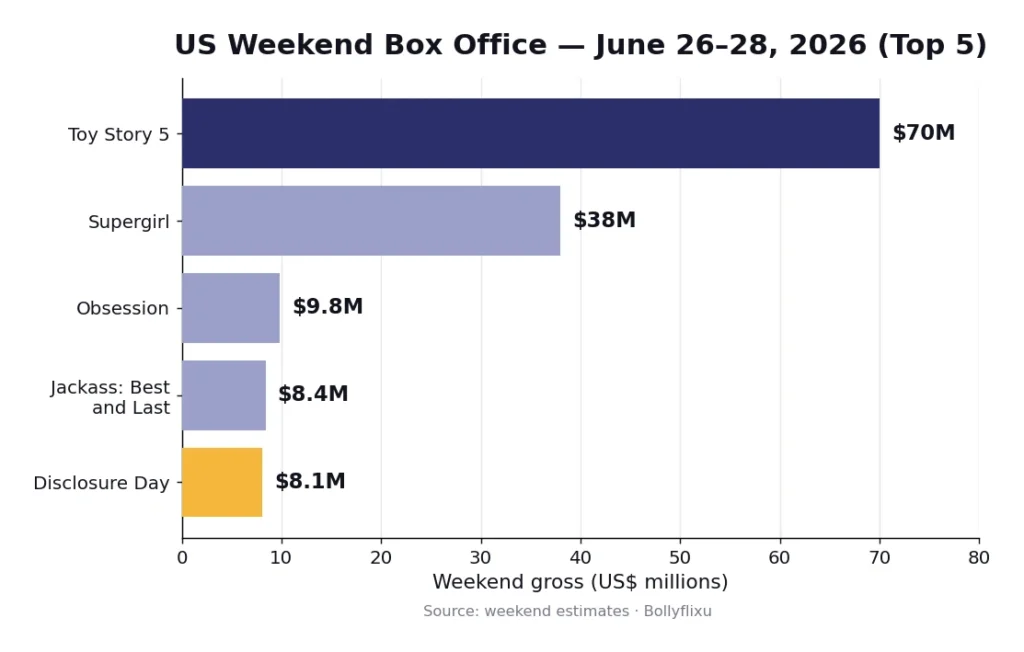
2026 has already delivered several notable debuts, but none has matched Toy Story 5. To see how dominant the film has been on the chart, look at the most recent weekend it led. Over the June 26–28 frame, Toy Story 5 earned around $70 million — nearly double its closest competitor.
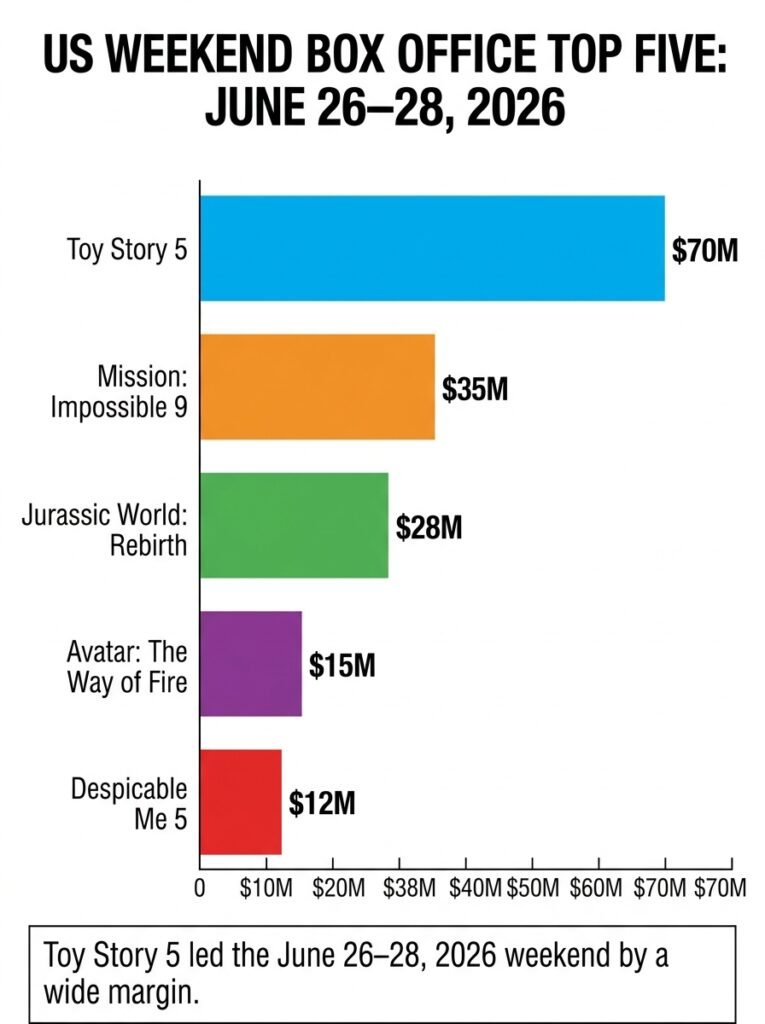
That weekend, the DC release Supergirl opened in second place with about $38 million domestically and $68 million worldwide — below its own studio’s projection — while the rest of the top five (Obsession, Jackass: Best and Last, and Disclosure Day) clustered in the high single digits. The gap underscores how thoroughly Pixar’s sequel has owned the summer corridor. If you want the full breakdown of how the DC film stumbled, see our coverage of the Supergirl box office opening.
Why Toy Story 5 is connecting with audiences
Several forces are working in the film’s favor at once. First, nostalgia: the original Toy Story premiered in 1995 and effectively put Pixar on the map, helping reshape animation for a generation. Audiences who grew up with Woody and Buzz are now bringing their own children, giving the franchise a built-in multi-generational draw that few properties can match.
Second, timing. Toy Story 5 arrived as schools let out for the summer, the single best window for a four-quadrant family film. With kids out of class and families looking for shared outings, animated tentpoles tend to over-perform — and the strong weekday grosses suggest exactly that dynamic is in play.
Third, the studio’s milestone year. Pixar is celebrating a major anniversary in 2026, and the marketing leaned into the brand’s legacy. That framing turned the release into something closer to an event than a routine sequel, which helps explain the unusually high opening and the durable midweek numbers.
Finally, scarcity of direct competition. For much of the film’s opening run there was no other major animated release going head-to-head for the same audience, allowing Toy Story 5 to absorb essentially all of the family demand in the market.
The second-weekend hold and what it signals
For blockbusters, the second weekend is often more revealing than the opening. A film can buy a big debut with marketing, but the hold shows whether word of mouth is positive. Toy Story 5 dropping to around $70 million — rather than falling off a cliff — points to healthy audience reception and repeat viewing, the engine behind a long theatrical run.
Strong holds also matter for the film’s path to the biggest milestones. Family titles historically “leg out” because parents take different children on different weekends and because matinee demand stays high through the summer. If Toy Story 5 continues to hold above industry averages, the cumulative total can climb well beyond what the opening alone would predict.
Toy Story 5 vs the franchise’s history
The Toy Story series has been one of animation’s most reliable performers for three decades. The 1995 original opened to about $29.1 million — a strong start for its era — and each subsequent entry raised the franchise’s commercial ceiling, with the series consistently ranking among the top-grossing animated films of its time. Toy Story 5 extends that trajectory by posting the largest opening in franchise history, a fitting headline for a property that helped define modern computer animation.
What’s notable is that the franchise has grown rather than fatigued. Many long-running series see diminishing returns by their fifth installment; Toy Story has done the opposite, with audience interest and opening figures trending upward. That durability is part of why the 2026 release was positioned as a centerpiece of Pixar’s anniversary slate.
What Pixar’s recent track record suggests
To gauge how high Toy Story 5 can climb, it helps to look at how Pixar’s biggest recent sequels behaved. Incredibles 2, which opened in June 2018 during a World Cup summer, legged out to about $608.5 million domestically — one of the highest totals ever for an animated film at the time. More recently, Inside Out 2 grossed north of $652 million domestically, ranking among the very top animated earners in history. Both films share a key trait with Toy Story 5: a massive opening followed by durable multi-week holds driven by family repeat business.
The comparison is instructive because it sets a realistic upper band rather than a fantasy ceiling. If Toy Story 5 tracks closer to those two titles than to a front-loaded blockbuster that fades quickly, its strong second weekend becomes the first data point in a long, profitable tail. The difference between a good run and a historic one usually comes down to exactly this: whether the weekday and matinee demand seen in that record Tuesday persists deep into the summer.
There is one structural variable worth flagging. Incredibles 2 benefited from a multi-weekend runway before another major family film arrived to compete for the same audience. Toy Story 5‘s final total will depend partly on how quickly the next big animated or four-quadrant release enters the market and starts splitting family ticket sales.
The international rollout to watch
Domestic numbers are only half the picture. Pixar’s marquee sequels typically earn the majority of their worldwide gross overseas, and the international rollout is where the largest milestones are won or lost. Key markets across Europe, Latin America and Asia tend to embrace the Toy Story brand, and staggered release dates mean fresh openings can keep the global total climbing for weeks after the domestic peak.
The signals to monitor are how the film opens in its biggest overseas territories, whether it holds through local school-holiday windows, and how it performs in markets where family animation routinely over-indexes. Strong international holds, layered on top of the domestic legs described above, are the most plausible route to a worldwide total in the upper range of Pixar’s recent output.
What’s next: Toy Story 5 box office projections
With a franchise-record opening and a sturdy second weekend, the realistic conversation is about how high the film can go. Two benchmarks are worth watching. The first is the $400 million domestic mark — a level that nearly every $150 million-plus opener in history has eventually reached, which makes it a reasonable expectation rather than a stretch for Toy Story 5.
The second is the global picture. Pixar’s recent sequels have shown enormous international upside, with several crossing the $600 million-to-$1 billion range worldwide. If Toy Story 5 mirrors that pattern overseas while maintaining its domestic holds, a nine-figure-plus worldwide finish is firmly in range. The variables to watch are upcoming family competition, the strength of weekday matinees through the rest of summer, and how the film plays in major international markets as it rolls out.
None of this is guaranteed — box office runs can soften if a major new family title arrives — but the early profile of the Toy Story 5 box office run is about as strong as Pixar could have hoped.
Why this matters for Pixar and the 2026 box office
Beyond the franchise itself, Toy Story 5 is a meaningful win for the wider theatrical market. A single film delivering 2026’s first $200 million weekend lifts the entire industry’s summer numbers and demonstrates that audiences will still turn out in force for the right event release. For Pixar, it reaffirms that the brand remains a dependable driver of family moviegoing in a crowded streaming era — a reassuring signal in a year the studio is using to celebrate its legacy.
For the rest of the 2026 calendar, the film sets a high bar. Competing releases now have to contend with a sticky, broadly appealing title that families are returning to week after week, which can compress the runway for other summer hopefuls.
Frequently asked questions
-
How much did Toy Story 5 make on its opening weekend?
The Toy Story 5 box office opening was approximately $160 million domestically, the biggest debut of 2026 to date and a franchise record for the series.
-
Is Toy Story 5 the highest-grossing movie of 2026?
It is the biggest opening of 2026 so far and has been the top film at the box office for consecutive weekends. Final yearly rankings depend on how it and other releases perform over the rest of the year.
-
How did Toy Story 5 hold in its second weekend?
The film grossed about $70 million in its second weekend — a strong hold for a family blockbuster — and remained number one at the domestic box office.
-
How does Toy Story 5 compare to earlier Toy Story films?
It posted the largest opening weekend in the franchise’s history, continuing the series’ long-running trend of growing rather than fading commercially since the 1995 original.
-
Can Toy Story 5 cross $400 million or $1 billion?
A $400 million domestic finish is realistic given that nearly all $150 million-plus openers eventually reach it. A worldwide total approaching or exceeding $1 billion is possible if international results follow the pattern of recent Pixar sequels, though it is not guaranteed.
The bottom line
The Toy Story 5 box office story so far is one of records and resilience: the biggest opening of 2026, the best single Tuesday of the year, a $200 million-plus cumulative haul in three weeks, and back-to-back weekends at number one. With a franchise-record debut behind it and strong holds in front of it, Pixar’s latest looks poised for one of the standout theatrical runs of the year — and a worthy headline for the studio’s anniversary celebration.
Sources: industry box office estimates and reporting from Box Office Mojo and Rotten Tomatoes. Figures are based on weekend and daily estimates and may be revised.