The Last House Movie 2026: Everything to Know About Netflix’s Sci-Fi Hit
Twenty-seven and a half million households pressed play in three days. The film reached that figure over its first weekend of streaming and went straight to the top of Netflix’s global rankings for the week of 3–9 August and it did so while carrying a Tomatometer score in the twenties and an audience score barely higher. That gap, between how many people watched and how few claim to have enjoyed it, is the actual story of The Last House.
Quick answer: The Last House is a science-fiction survival thriller released on Netflix on 7 August 2026, directed by Louis Leterrier and starring Greta Lee and Wagner Moura. A family wakes to find every door and window of their home sealed by an unseen force, and must survive both dwindling supplies and whatever waits outside.
What is the last house movie actually about
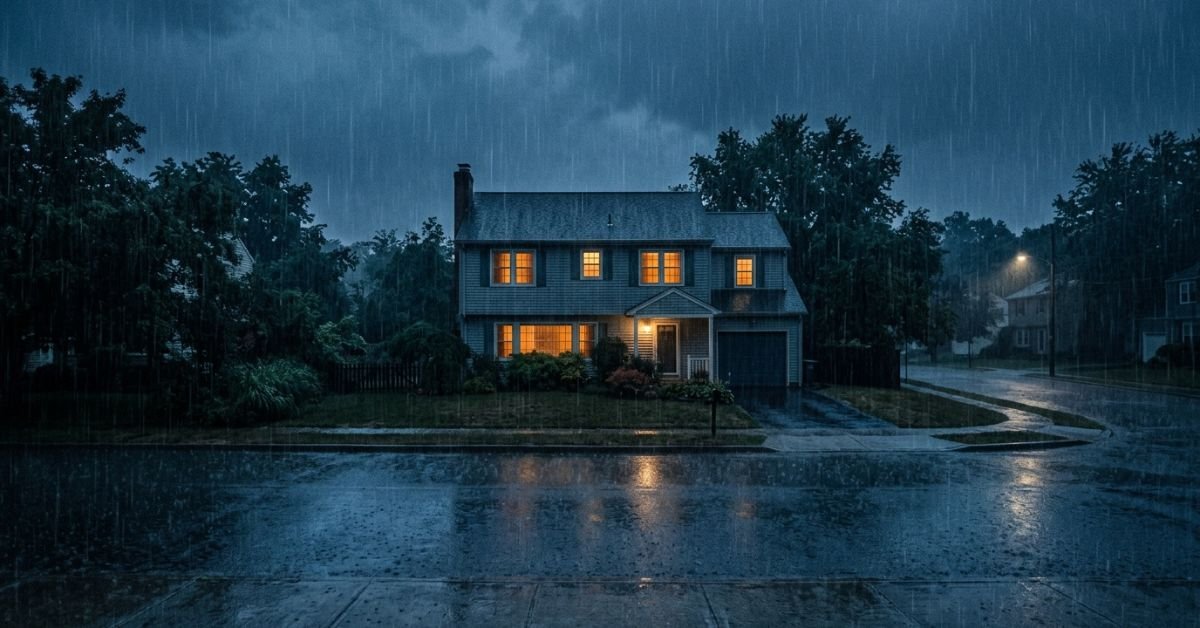
The setup is almost aggressively simple, which is part of why it travels so well across languages and borders. An ordinary day turns strange when a family of four wakes to find they cannot get out of their own house every door and every window has become impossible to open, and the place they felt safest in becomes a cell as supplies run down and something outside refuses to let them leave.
Crucially, they are not alone in this. The same thing has happened to the houses around them, and shapes move through an unending rainfall outside, visible but unexplained. That detail is what lifts the film out of haunted-house territory and into something closer to a global event witnessed through one living-room window.
There is no rescue subplot, no cutaway to a command centre, no scientist explaining the phenomenon on television. You learn what the family learns, when they learn it. For some viewers that restraint is the whole appeal. For others it is exactly the problem a mystery box that keeps promising an answer it is reluctant to hand over.
Who directed The Last House, and who is in the cast
The film is directed by Louis Leterrier, a name most audiences will recognise from mainstream studio spectacle rather than chamber-piece dread. His previous credits include Fast X and Now You See Me, which makes a claustrophobic two-hander inside a suburban house a deliberate change of register. The screenplay is by Matthew Robinson, and the film was produced by Chernin Entertainment and 3 Arts Entertainment among others, with Netflix distributing.
The leads are a genuinely interesting pairing. Greta Lee, known internationally for Past Lives, plays opposite Wagner Moura, who earned an Oscar nomination for The Secret Agent two performers associated with prestige, character-led work rather than genre. Netflix’s own companion feature names the parents as Ann and Jason, with children Graham and Ruth, and lists two actors for each child.
That last point is worth pausing on. Casting a younger and older performer for the same child is not an accident; it signals that the confinement is not measured in days.
Why did The Last House reach number one worldwide
Three forces stacked on top of each other.
The first was the marketing, which became a story in its own right. Netflix ran a stunt in which a man appeared to be living inside a billboard on Sunset Boulevard, and the campaign went viral ahead of release. That curiosity translated directly into viewing figures.
The second is the release model. A Netflix original does not roll out territory by territory over months. It appears in every subscribing country on the same morning, subtitled and dubbed, which compresses what used to be a year of staggered word-of-mouth into a single weekend.
The third is genre gravity. Apocalyptic science fiction has an unusually strong record on the platform three of Netflix’s ten most-watched films of all time sit in that category, including Bird Box and Leave the World Behind. Subscribers have been trained to expect this kind of film there.
The opening ranked as the fifth-strongest debut for a Netflix original film in 2026. A fortnight later it was still the most-watched movie on the service worldwide, with around 113.9 million hours viewed.
Why are the reviews so much worse than the viewing figures
Because popularity and quality were never the same measurement, and this film has become an unusually clean demonstration of that.
Variety’s review found the atmosphere effective and the logic absent an end-of-days scenario that works on clamminess even when it stops making sense. ScreenRant went considerably further, scoring it two out of ten and calling it one of the year’s worst films despite a strong premise. Aggregated critic reactions run along similar lines: tonally confused, sporadically compelling, strongest as a family-in-confinement story and weakest once the mystery is unwrapped.
Audiences have not exactly rescued it either. The public score sat close to the critics’ at around 28 percent. Reader reactions swing hard in both directions some dismissing it outright, others arguing the premise is genuinely intriguing and the pile-on overstated
What is trapping the family
The threat is never given a name in the script; the creative team simply referred to them as the creatures, and the film deliberately stays locked to the family’s limited perspective, because a trapped family would have no vocabulary for this either. Their origin is implied rather than stated their abilities are tied to water, and the film opens with an Arthur C. Clarke line about how poorly the name “Earth” suits a planet that is mostly ocean.Netflix’s own breakdown addresses the questions viewers were left with: why the youngest child grasps the creatures before the adults do, why this particular family is spared, and who speaks the final line of the film. The creatures having remained outside for years before finally entering the house is itself the point the question the ending poses is how this family survived as long as it did.
Whether that lands as elegant ambiguity or as a script declining to finish its own argument is precisely where critics and defenders part company. A recurring complaint is that the film is at its best before it explains itself, and loses its grip once the creatures are shown.
Is The Last House a pandemic movie
It is the first comparison almost everyone reaches for, and the film invites it a family sealed indoors, watching the outside world through glass, rationing what is in the cupboards.
The writer has pushed back on the reading, saying the idea came to him well before, rather than as a direct response to lockdown. Still, intention and reception are different things. Part of the critical hostility has centred on the film feeling like a lockdown-era thought that has arrived several years late, and a good deal of the audience commentary online has run the same way, joking that the film would have hit far harder in 2020.There is a more generous interpretation in circulation too that the confinement is a vehicle for something about attention itself, a household cut off from the churn of news and forced back to simpler pleasures.
How does it compare to Bird Box and Leave the World Behind
If you have seen either, you already know the shape of the experience: an unexplained catastrophe, a family unit under pressure, and a resolution that withholds more than it delivers.
The differences are worth flagging. Bird Box moves it is a journey film with an external goal. Leave the World Behind is talkier, more interested in social distrust than in survival mechanics. The Last House is the most static of the three by design, and that stillness is both its strongest instrument and its biggest liability. All three sit in the same commercially proven lane, though the earlier two hold notably better critical standing.The comparison some coverage has reached for instead is a blend of Stephen King and H.P. Lovecraft domestic realism up front, cosmic indifference underneath. That is an accurate description of the ambition. Whether the execution earns the comparison is a separate question.
Is The Last House worth watching
Watch it if you enjoy single-location tension, you rate atmosphere and performance above tidy explanations, or you want to be part of a conversation currently happening across the world at the same time. Even some of its harsher critics concede the central idea is compelling, and the two leads are the reason to stay in the room.
Wait, or skip it, if unresolved endings frustrate you, if you want a plot that holds together under scrutiny, or if the premise sounds emotionally close to something you lived through and would rather not revisit. The most consistent criticism is a third act that dissipates rather than delivers — and no amount of goodwill in the first hour fixes that for a viewer who needs the landing.
Key Takeaways
- The Last House movie premiered on Netflix on 7 August 2026, directed by Louis Leterrier and written by Matthew Robinson.
- It stars Greta Lee and Wagner Moura as parents sealed inside their home with their two children.
- It opened with 27.5 million views in three days and topped Netflix’s global chart, and was still the most-watched film on the service two weeks later.
- Critical and audience scores have both landed in the twenties a rare split between reach and reception.
- The film withholds a full explanation by design, which is the single biggest dividing line between people who admire it and people who resent it.
The Last House at a Glance
| Detail | Information |
|---|---|
| Title | The Last House |
| Release date | 7 August 2026 |
| Platform | Netflix (worldwide) |
| Director | Louis Leterrier |
| Writer | Matthew Robinson |
| Lead cast | Greta Lee, Wagner Moura |
| Genre | Horror / science fiction / thriller |
| Rating | PG-13 |
| Runtime | Just under two hours |
| Opening viewership | 27.5 million views in three days |
FAQ
Where can I watch The Last House?
It streams exclusively on Netflix and is available to subscribers worldwide, with the usual dubbing and subtitle options. There is no separate rental or purchase option, and it did not receive a wide theatrical run.
Was The Last House ever called something else?
Yes. When the project was first announced in May 2024, it carried the working title 11817. The number is worth keeping in mind if you come across older production listings that seem unrelated.
Is The Last House based on a book or a true story?
No. It is an original screenplay by Matthew Robinson, not an adaptation. The scenario is entirely fictional, despite a premise engineered to feel uncomfortably plausible